
What Are the Brown Spots on My Dog’s Teeth?
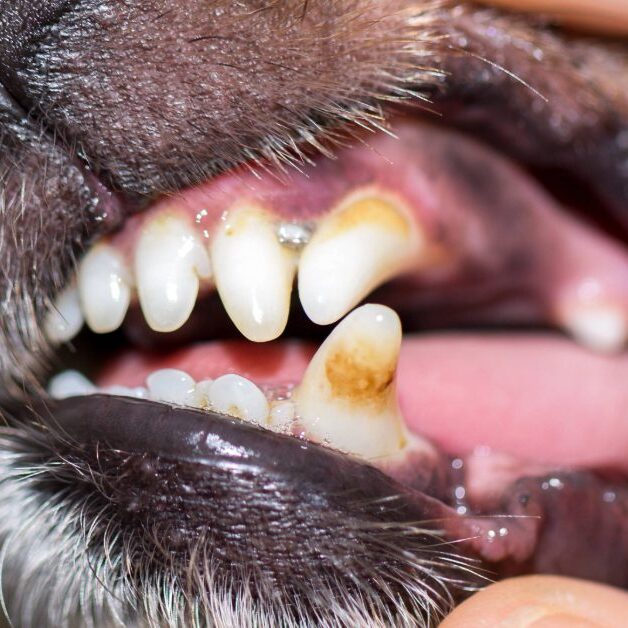
That brown stuff on your dog’s teeth is almost always tartar, a hardened crust of plaque that has absorbed minerals from saliva and pigment from food. Brown spots on dog’s teeth can also come from stained enamel or a damaged tooth, so the color alone doesn’t settle the question. Most owners notice the discoloration while lifting a lip during play or catching a big yawn. At Montgomery Animal Hospital in Cincinnati, OH, we field questions about brown spots on dog’s teeth nearly every day, and the answers range from simple buildup to a tooth that needs a closer look. This guide explains what the brown color means, how it differs from plaque, when it points to gum trouble, and how a veterinary team clears it away. Knowing what you’re seeing helps you decide how quickly to book a visit.
Is the Brown Buildup on My Dog’s Teeth Plaque or Tartar?
Brown buildup is usually tartar, while plaque is the softer, paler film that forms first. Telling the two apart explains why brushing alone stops working once the color deepens.
How Plaque Hardens Into Tartar
Plaque is a sticky layer of bacteria that coats the teeth within hours of a meal. It looks cream or slightly yellow, so it’s easy to overlook. Minerals in your dog’s saliva soak into that film, and within a few days it starts to harden into tartar. Tartar has a porous surface that absorbs pigment from food, saliva, and bacteria, so it darkens from yellow to tan to brown over time. That is why brown spots on dog’s teeth tend to appear first along the gumline of the back molars and upper canines, where saliva flows heavily.
Plaque and Tartar Compared
A few features separate the two:
- Plaque feels slimy and looks pale, while tartar feels rough and ranges from tan to nearly black
- A toothbrush can disturb plaque, but tartar bonds to enamel and needs professional tools
- Plaque forms daily, while tartar reflects days or weeks of accumulation
- Plaque causes mild gum irritation, while tartar continues to irritate the gums until a veterinary team removes it
Why Some Dogs Collect More Than Others
Not every dog develops brown spots on dog’s teeth at the same pace. Small breeds with crowded mouths, dogs who eat mostly soft food, and seniors tend to gather tartar faster. Saliva chemistry and genetics also play a part, which explains why two dogs eating the same diet can have very different teeth.
Does Brown Staining Mean My Dog’s Teeth Are Rotting?
Usually not. Brown spots on dog’s teeth most often come from tartar, and true cavities are uncommon in dogs because their teeth are shaped differently and their diets contain little sugar. Still, a few causes of brown discoloration do involve damage, so it helps to know the difference.
Other Reasons a Tooth Turns Brown
Tartar is the most frequent explanation, but veterinarians also consider:
- A fractured tooth whose inner pulp has been exposed
- A tooth that took a hard knock or heavy chewing injury and darkened afterward
- Enamel that formed poorly because of illness or certain medications during puppyhood
- Surface stains from foods, treats, or bacteria
When One Dark Tooth Stands Out
A single tooth that looks darker than its neighbors deserves special attention. Trauma can damage the nerve inside a tooth, and the tooth then changes color from within. That kind of discoloration won’t scale away, and the tooth may hurt even while your dog eats normally. When only one of the brown spots on dog’s teeth looks different, such as a dark, glossy tooth instead of a crusty patch, mention it to your veterinarian.
Why Dental X-Rays Settle the Question
The visible crown is only part of a tooth. Dental X-rays show the roots, the surrounding bone, and any infection that a visual check would miss. Our Montgomery Animal Hospital team can recommend imaging when a discolored tooth raises questions, which lets veterinarians tell harmless staining apart from a tooth that needs treatment.
How Does Brown Tartar Buildup Lead to Gum Disease in Dogs?
Brown spots on dog’s teeth are more than a cosmetic issue, because tartar gives bacteria a rough, protected surface and those bacteria inflame the gums around it. Left in place, the irritation can progress from mild redness to lasting damage of the structures that hold teeth in position.
From Crust to Inflammation
Tartar’s rough texture attracts fresh plaque, which then piles onto the older deposits. Bacteria along the gumline trigger gingivitis, the earliest stage of gum disease, where tissue turns red and puffy. Gingivitis can reverse once the buildup is removed. If the deposits stay, the infection works deeper, forming pockets between tooth and gum and breaking down the ligament and bone that anchor the tooth. This later stage is called periodontitis, and its damage does not heal on its own. Many dogs with heavy brown spots on dog’s teeth already have some gum change hiding under the tartar.
Signs the Gums Are Struggling
Beyond discoloration, watch for:
- A thin red line where the gum meets the tooth
- Blood on chew toys or in the water bowl
- Teeth that look loose or shifted
- New reluctance to crunch hard kibble
Why the Effects Reach Beyond the Mouth
Bacteria from inflamed gums can enter the bloodstream, and researchers have linked advanced dental disease with strain on organs such as the heart and kidneys. Mouth pain also affects mood and appetite, so a dog with sore gums may seem grumpier or less playful. Addressing brown spots on dog’s teeth early protects your dog’s comfort as well as the teeth themselves.
What Is the Best Way to Get Rid of Brown Buildup on Dog Teeth?
The most effective way to remove brown spots on dog’s teeth is a professional dental cleaning performed by our veterinary team. Once tartar has hardened, brushing and chews cannot dislodge it, and safe removal takes specialized tools and training.
What Happens During a Professional Cleaning
A cleaning begins with an exam and, in most cases, pre-anesthetic testing. While your dog rests under general anesthesia, our team scales tartar from above and below the gumline, often with ultrasonic instruments, then polishes the enamel to smooth microscopic scratches that attract new plaque. Dental X-rays and probing of each tooth reveal problems beneath the surface. If our team finds a diseased tooth, the veterinarian will discuss treatment options with you. Afterward, the brown deposits are gone, and your veterinarian can show you the healthy surfaces underneath.
Why Scraping at Home Backfires
Some owners try to pick at tartar with a metal scaler or a fingernail. We strongly advise against it. Scraping can gouge enamel, cut the gums, and leave rough grooves where plaque attaches even more easily. It also can’t reach below the gumline, where disease develops, so the real problem continues while the surface looks better. Anesthesia-free “cosmetic” scaling shares those limits.
Helping New Buildup Stay Away
After a cleaning, prevention becomes the goal. Ask your veterinarian about a daily brushing plan, dental diets, and products that have earned Veterinary Oral Health Council acceptance. Regular checkups let the team track how quickly your dog’s teeth collect deposits and set a cleaning schedule to match. Catching brown spots on dog’s teeth while they are still small usually means gentler care later.
Clear Answers About Your Dog’s Smile at Montgomery Animal Hospital
A little brown color on a tooth can be nothing more than tartar, or it can be the first hint of a hidden problem. Owners can’t judge the difference by eye, and that is exactly where a veterinary exam helps.
Montgomery Animal Hospital cares for dogs and their families across Cincinnati, OH. Our team will look closely at every tooth, explain what those brown spots on dog’s teeth mean in plain language, and recommend a plan that fits your dog’s age, breed, and comfort. If you’ve spotted discoloration during a cuddle session, request an appointment online. We’d love to help your dog show off a healthier smile.
Recent Posts
About Us
At Montgomery Animal Hospital in Cincinnati, OH, we provide AAHA-accredited care that combines advanced medicine with generations of trusted relationships. We’re committed to helping pets of all kinds live healthy, happy lives.